News and Events
Cambridge scientists help African science to THRiVE
More than 80 Cambridge researchers have signed up to take their research expertise to Africa to strengthen health research on the continent.
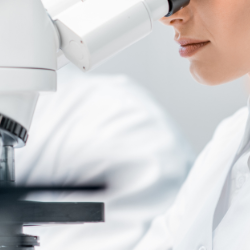
Digital Microscopy system
A new microscopy system has been installed in the Department's Teaching Classroom
The American Association of Immunologists (AAI) Journal of Immunology recognises
the earlier work of Professor Chris Rudd on CD4-lck as a "Pillar Publication" in the field of immunology this month.
Pfizer extends field of use for antibody engineering technology
Pfizer extends field of use for antibody engineering technology developed by Dr Mike Clark of the Department of Pathology and Dr Lorna Williamson of the Department of Haematology
The Rudd lab publishes a paper in Immunity
(Vol. 12, 2010 Mar 24) on the mechanism used by T cells of the immune system to move and interact with antigen-presenting cells (APCs) in lymph nodes.
‘Jabs for the boys’ could help beat hidden cancer
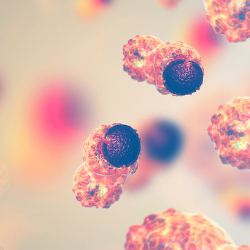
Professor Margaret Stanley of the Department of Pathology is part of a team
that calls for a widened STD immunisation scheme which could curb cancer in
boys as well as young women
Science Day fun in Pathology
Staff from the Department participated once again the University’s annual Science Festival. More
Award for Professor Mark Field
Professor Mark Field of the Department of Pathology has been awarded the CA Wright Memorial Medal by the British Society of Parasitology.
iGEM success
A University of Cambridge team including members of the Department of Pathology, was awarded the Grand Prize at the iGEM2009 Synthetic Biology competition finals at the Massachusetts Institute of Technology (MIT).
Research provides new aid in the study of diabetes
Professor Anne Cooke's work with Dr Jennifer Nichols at the Centre for Stem Cell research has resulted in a recent breakthrough enabling the generation of embryonic stem cells from NOD (non obese diabetic) mice. This highly significant outcome provides a new research tool for diabetes researchers, enabling a complete genetic analysis of diabetes.
Research reveals new information about antibiotic resistance in bacteria
Scientists at the University of Cambridge have uncovered the final piece in the jigsaw revealing the structure of ‘efflux pumps’ which allow Salmonella and other disease-causing bacteria to develop resistance to antibiotics and other drugs. The research, supported by the Wellcome Trust, allows greater understanding of how bacteria escape treatment and may help scientists develop new strategies to prevent antibiotic resistance.
The devil within - more clues on how Salmonella infects our cells
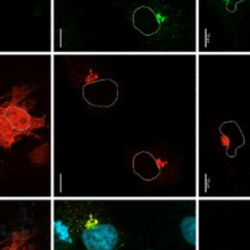
A team led by Professor Vassilis Koronakis in the Department has uncovered an unexpected pathway by which Salmonella manipulates the mamalian host cell to promote bacterial intracellular growth in membrane-bound Salmonella-containing vacuoles (SCVs). Their latest findings are published this week in Cell Host Microbe.
- University sources
- Newsletter
- Research Horizons magazine
- Reporter
- Events@cam